
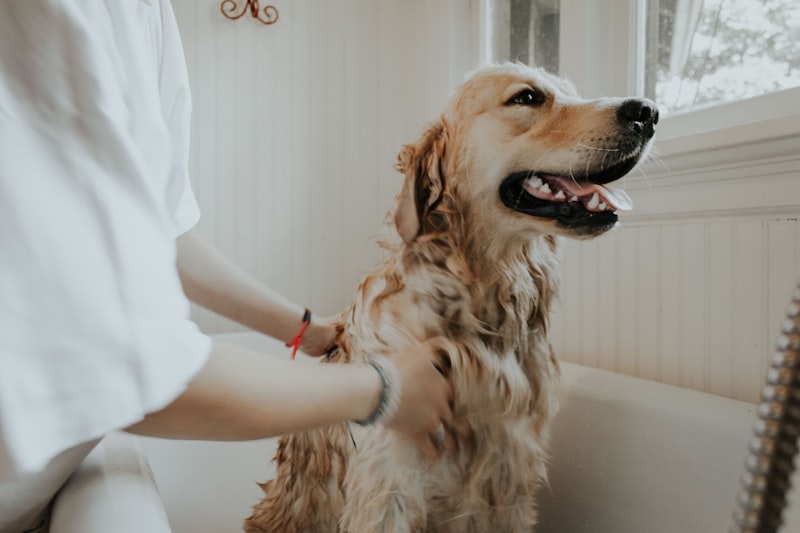
Regular brushing is the single most effective way to prevent matting. Photo: Unsplash
You might think a few tangles in your dog's coat are just a cosmetic issue. Something that makes them look a bit scruffy but isn't a big deal.
It is a big deal.
Matting — where loose, dead hair tangles together and tightens against the skin — is one of the most common problems groomers see, and one of the most underestimated by pet owners. Left unchecked, mats don't just look messy. They cause real pain and can lead to serious health problems.
What Actually Happens When Fur Mats
Every strand of pet hair goes through a growth cycle: growing, resting, shedding. When dead hair isn't brushed out, it gets trapped by the surrounding coat. Add movement (walking, sitting, scratching), moisture (rain, swimming, even humidity), and friction (where the collar sits, behind the ears, between the legs), and that loose hair starts to felt together — exactly the same process used to make wool felt.
Once a mat forms, it tightens over time. It pulls on the skin underneath. And it creates a warm, airless pocket right against your pet's body. That's where the problems start.
The 3 Stages of Matting
Surface Tangles
Loose dead hair begins tangling at the coat surface. Still easy to brush out with the right tools and technique. This is the window to act.
Compacted Mats
Tangles tighten and felt together, forming dense clumps close to the skin. Pulling and discomfort begins. Skin underneath becomes warm and airless.
Pelting
Mats fuse into a solid "pelt" covering large areas. Skin is compressed, blood flow restricted. Pain is constant. Infections may be hiding underneath.
The Health Risks Most Owners Don't Know About
⚠️ Warning: Matting Is a Medical Issue
Matting isn't cosmetic. Veterinary dermatologists classify severe matting as a predisposing factor for multiple skin conditions. The consequences are cumulative — the longer mats stay, the worse the damage.
Skin Damage & Pain
Mats pull. Constantly. Every time your pet moves, sits down, or scratches, the mat tugs on the skin beneath it. Over time, this causes:
- Bruising and irritation of the underlying skin
- Restricted blood flow in severe cases — tight mats around limbs or toes can cut off circulation
- Open sores where the mat has rubbed the skin raw
A study in the Journal of Veterinary Behavior noted that matting-related discomfort is a significant but often unrecognised source of chronic pain in long-haired dogs, particularly in older animals who can no longer groom themselves effectively (Mills et al., 2020).
Hidden Infections
The space between a mat and the skin is warm, moist, and has no airflow. That's the perfect environment for:
- Bacterial skin infections (pyoderma) — particularly Staphylococcus species
- Fungal infections — including dermatophytes (ringworm)
- Hot spots (acute moist dermatitis) — raw, oozing patches that develop rapidly under mats, especially in humid weather
💡 Sydney Climate Factor
In Sydney's humid summers, this risk increases significantly. A mat that seems harmless in winter can become a hot spot incubator by January. If your pet spends time outdoors or swims, the risk multiplies.
Parasite Hiding Spots
Mats make it nearly impossible to see what's living on your pet's skin. Fleas, ticks, and mites can establish themselves under matted fur without anyone noticing. In eastern Australia, where paralysis ticks (Ixodes holocyclus) are a genuine threat, a heavily matted coat makes daily tick checks — the most important prevention measure — practically useless.
🐾 At Petopia
We've seen it firsthand: an owner brings in a matted dog for grooming, and as the mats come off, there's a tick underneath that nobody could have found through the coat. Regular grooming doesn't just keep your pet looking good — it keeps them safe.
Masking Wounds & Lumps
If your pet gets a scratch, a bite wound, or develops a lump, you'd normally spot it while patting or brushing them. Matted fur hides all of this. Wounds can become infected without treatment. Lumps can grow unnoticed. By the time the mat is removed, what started as something minor has become something that needs veterinary attention.
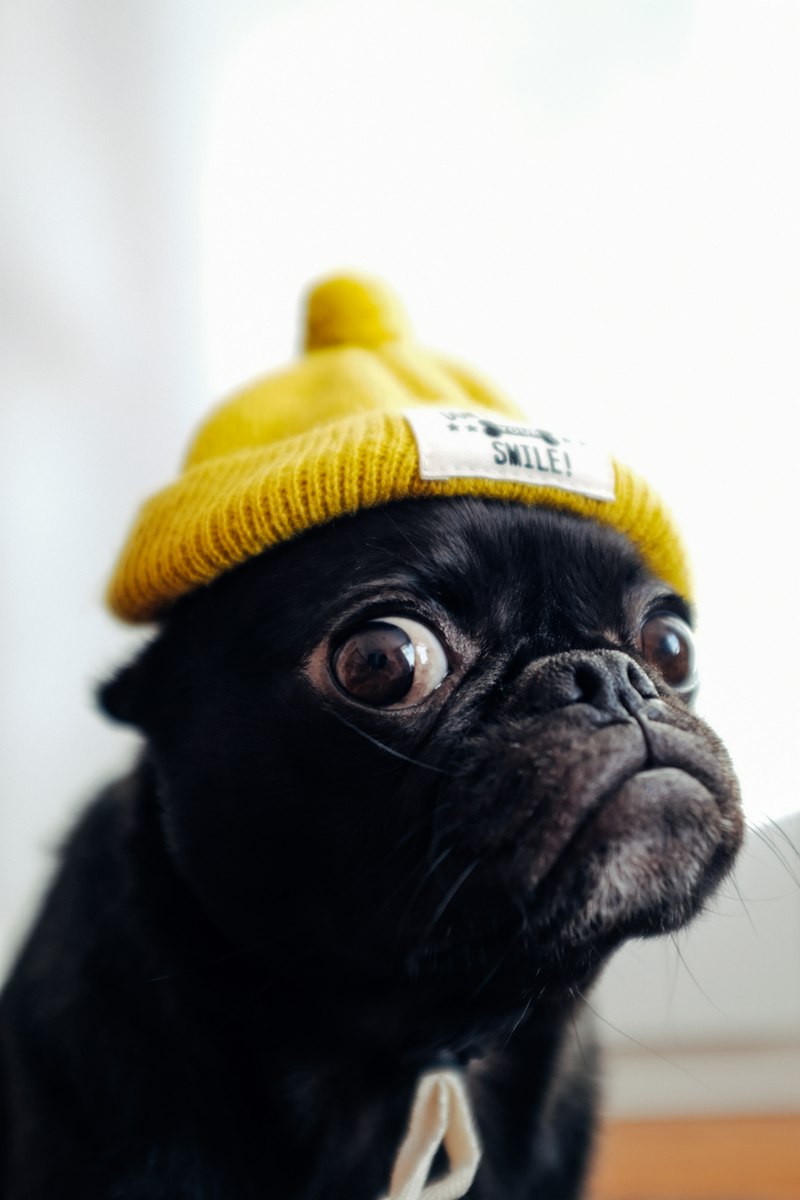
Curly and wool coats like poodles and doodles are among the most mat-prone breeds. Photo: Unsplash
Which Breeds Are Most at Risk?
Not all coats mat equally. The structure of the hair makes a huge difference.
The Doodle Problem
In Australia, Cavoodles and Labradoodles are among the most popular breeds — and they're among the most mat-prone. The "low-shedding" reputation that attracts many owners comes with a trade-off: the hair that doesn't fall out stays in the coat and tangles instead.
🐾 The Low-Shedding Trade-Off
Breeds marketed as "hypoallergenic" or "low-shedding" (Poodle crosses, Bichon crosses) have coats that continuously grow rather than following a traditional shed cycle. This means dead hair stays embedded in the coat, making regular brushing not optional — it's essential. Without it, matting is inevitable, not just possible.
The Science of Hair: Why Mats Form
Understanding hair structure explains why some coats mat and others don't. Every hair shaft has three layers:
Cuticle
The outer layer — overlapping scales like roof tiles. When cuticle scales are raised (from damage, humidity, or friction), they interlock with neighbouring hairs. This is how tangles begin.
Cortex
The middle layer — provides strength and elasticity. The shape of the cortex determines whether hair is straight, wavy, or curly. Curly cortex structures naturally encourage tangling.
Medulla
The inner core — present in thicker hair, absent in fine hair. Fine-haired breeds (Maltese, Yorkies) lack a strong medulla, making their hair more flexible and more prone to tangling.
When moisture, friction, and dead hair combine, the raised cuticle scales of neighbouring hairs interlock — exactly the same felting process that's been used for thousands of years to turn loose wool into solid fabric. The difference is that on your pet, this fabric is attached to living skin.
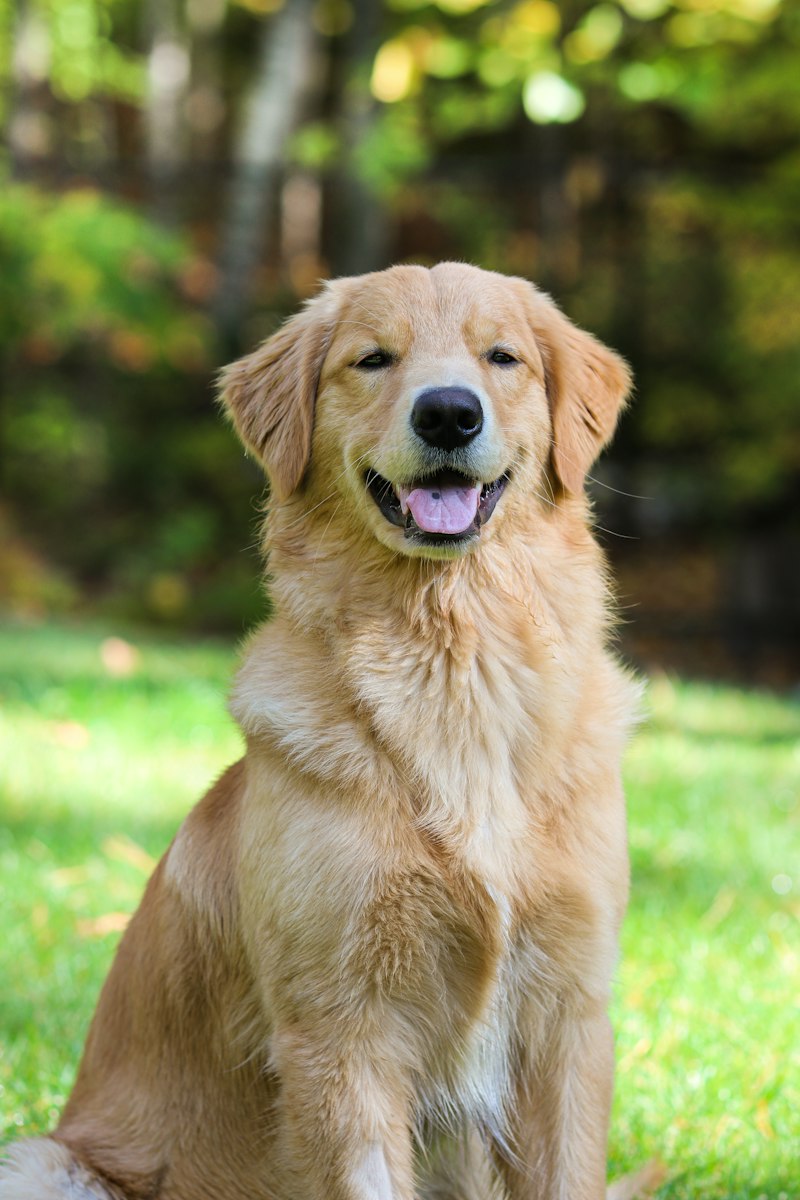
Double-coated breeds like Golden Retrievers face seasonal matting risk when their undercoat "packs." Photo: Unsplash
Prevention: What Actually Works
Brushing — The Right Way
The single most important thing you can do at home is regular brushing. But technique matters:
💡 Pro Tip: The #1 Brushing Mistake
Brush all the way to the skin, not just the surface. This is the most common mistake we see. The top layer looks smooth, but mats form at the base of the coat. Use a slicker brush and work in small sections, lifting the hair and brushing from the skin outward.
Brush before bathing, not after. Water tightens existing tangles. If you bathe a dog with knots, those knots will set into concrete-like mats during drying. Always brush thoroughly before any bath.
Dry properly after bathing. Leaving a curly or long coat to air-dry is an invitation for matting. High-velocity drying (what groomers use) straightens the coat and separates the hair shafts. At home, a standard dryer on a cool/warm setting while brushing through the coat makes a significant difference.
The Right Brush for the Job
💡 The Comb Test
After brushing, run a metal comb through the entire coat. If it glides through without catching — you're done. If it snags anywhere, there's still a tangle underneath. This is the test groomers use, and it's the standard your home brushing should aim for.
Brushing Frequency by Coat Type
Professional Grooming Schedule
Home brushing keeps things maintained between appointments. Professional grooming catches what you miss and provides the deep cleaning, blow-drying, and thorough de-tangling that's difficult to achieve at home.
For mat-prone breeds (Poodles, Doodles, Maltese, Shih Tzu), a full groom every 3–4 weeks is the sweet spot. Extending beyond 6 weeks without professional attention is where problems tend to start — even with diligent home brushing.
De-Matting vs Shaving — When Is It Too Late?
When mats are caught early, a groomer can often work them out with a combination of detangling spray, a slicker brush, and patience. This is de-matting — and it's only appropriate when:
- The mat is small and loose
- It hasn't tightened against the skin
- The pet isn't in pain or distress
When mats are tight, extensive, or close to the skin, the only humane option is to clip them off. Attempting to brush out severe mats causes pain, can tear the skin, and puts your pet through unnecessary stress.
This is one of the hardest conversations groomers have with owners. A dog comes in with a beautiful coat that looks fluffy on the surface — but underneath, the entire undercoat is pelted together against the skin. The only option is a short clip, sometimes down to a few millimetres. The owner is disappointed. But the alternative — yanking mats off a painful, inflamed skin surface — isn't something any responsible groomer will do.
⚠️ Never Use Scissors at Home
Do not try to cut mats out with scissors. This is the most common cause of grooming-related injuries we see. Mats sit directly on the skin — scissors can easily slice the skin underneath. Always leave it to a professional groomer with proper clippers.
A note on "clipper irritation": After shaving severely matted areas, some pets develop temporary redness or irritation. This isn't from the clippers — it's from the skin finally getting airflow after being compressed under mats. It usually resolves within 24–48 hours. In rare cases where the skin was already damaged underneath, a vet visit may be needed.
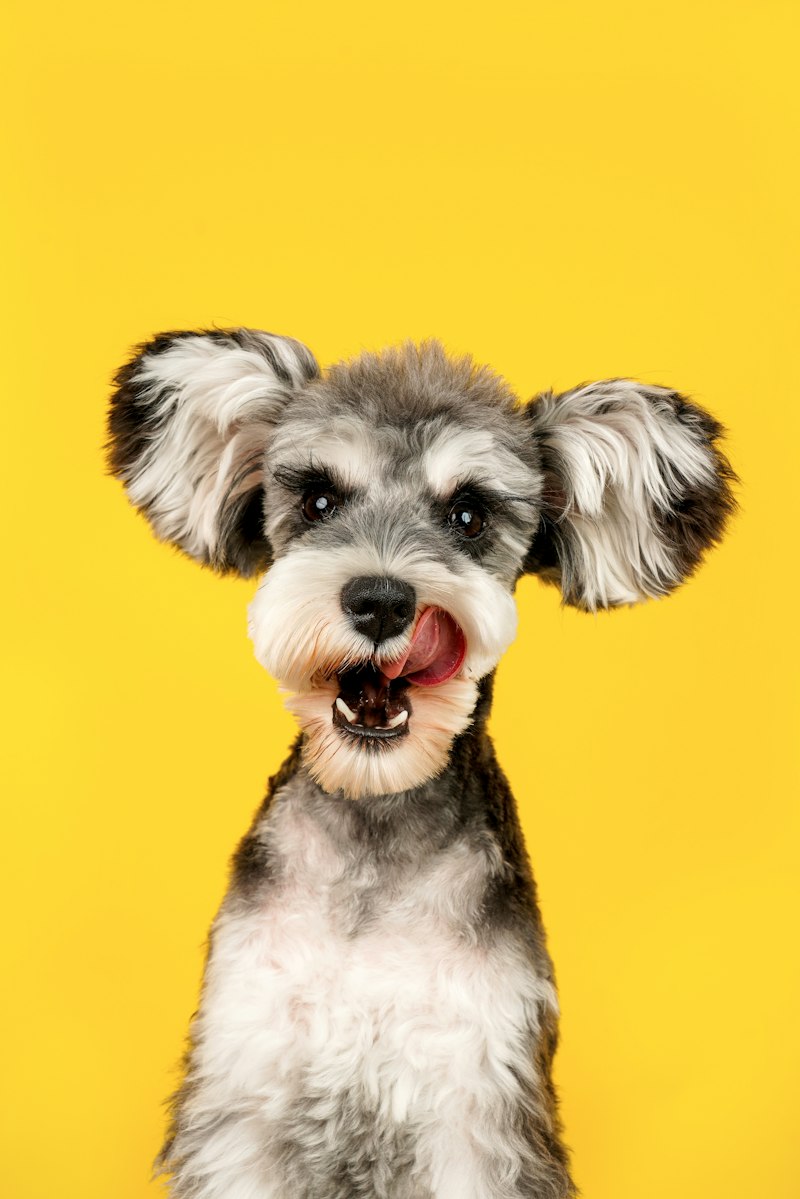
Professional grooming every 3–4 weeks is the most effective matting prevention for high-risk breeds. Photo: Unsplash
Common Mistakes That Lead to Matting
"I brush them every day!"
...but only the top layer. Surface brushing doesn't reach the base of the coat where mats form.
"They need their coat to stay warm in winter."
Winter coats are thicker, which means more opportunity for matting. Cold, wet conditions add moisture that tightens tangles. Winter is actually when matting risk increases.
Bathing without brushing first
Water + tangles = mats. Every time. Always brush thoroughly before any bath.
Putting off grooming because of cost
A regular 4-weekly groom is significantly cheaper than an emergency de-mat session plus the vet visit for the skin problems that follow.
Using the wrong brush
A pin brush or bristle brush might feel like you're doing something, but for curly and long coats, only a slicker brush reaches deep enough to prevent matting.
When Matting Becomes a Welfare Issue
In severe cases, matting isn't just a grooming problem — it's an animal welfare concern. The RSPCA considers severe, untreated matting as potential evidence of neglect under state animal welfare legislation.
⚠️ RSPCA NSW Case — Blue Mountains 2025
In September 2025, RSPCA NSW Inspectors executed a search warrant at a property in the Blue Mountains, seizing 37 dogs suffering from heavy matting and associated health issues. The owners were convicted of animal cruelty offences — including failing to provide veterinary treatment — and received a 10-year ban from owning animals.
This isn't about shaming anyone. Most cases of severe matting happen gradually — the owner doesn't realise how bad it's gotten underneath because the surface still looks okay. Regular professional grooming is the easiest way to prevent this situation from ever developing.
What to Do If Your Pet Is Already Matted
If you suspect your pet has matting:
Don't try to cut mats out with scissors at home. This is the most common cause of grooming-related injuries we see. Mats sit directly on the skin — scissors can easily slice the skin underneath. Leave it to a groomer with proper clippers.
Book a grooming appointment sooner rather than later. Mats only get worse with time. The longer you wait, the more likely shaving becomes the only option.
Be prepared for a shorter cut than expected. If the matting is extensive, your groomer may need to clip shorter than you'd like. Trust their judgement — they're prioritising your pet's comfort.
Follow the aftercare advice. Once the coat grows back, establish a brushing routine to prevent it from happening again.
What Petopia Does
🐾 At Petopia Grooming, Eastgardens
Every groom at Petopia includes a full coat assessment. We check for early signs of matting, skin irritation, parasites, and anything else hiding under the surface. Here's what sets our approach apart:
- Thorough coat assessment before every groom — we check mat severity and skin condition to determine the safest approach
- Honest conversations — if your pet needs a shorter clip for their comfort, we'll explain why and what to expect
- High-velocity drying that separates the coat and prevents tangles from setting in
- Personalised home care advice — we'll show you the right brush and technique for your pet's specific coat type
- Regular schedule reminders to help you stay on track and avoid the matting cycle
Your pet's coat is their first line of defence. Keep it in good shape, and everything underneath stays healthier too.
The Bottom Line
A well-brushed coat isn't just about looking good.
It's about your pet being comfortable, healthy, and free from hidden problems.
Regular brushing at home, combined with professional grooming every few weeks, is the most effective thing you can do.
References
Miller, W.H., Griffin, C.E. & Campbell, K.L. (2013). Muller & Kirk's Small Animal Dermatology, 7th Edition. Elsevier.
Mills, D.S. et al. (2020). "Pain and problem behaviour in cats and dogs." Journal of Veterinary Behavior, 37, 67–74.
Nuttall, T. et al. (2009). "Staphylococcal skin infections in dogs." In Practice, 31(3), 116–124.
RSPCA Australia. "What is animal neglect?" Knowledgebase.
RSPCA NSW (2025). Blue Mountains dog seizure prosecution — 37 matted dogs, 10-year ownership ban.
Tater, K. (2023). "Approach to the Pruritic Dog." Veterinary Clinics of North America: Small Animal Practice, 53(1).
Saridomichelakis, M.N. & Olivry, T. (2016). "An update on the treatment of canine atopic dermatitis." The Veterinary Journal, 207, 29–37.
By Petopia Grooming, Eastgardens — Shop 5/11 Oscar Pl, Eastgardens NSW 2036
Open Wed–Fri 10:30 AM – 5 PM, Sat–Sun 10:30 AM – 6 PM · Appointments preferred, walk-ins welcome
0430 660 533 | petopiagrooming.com.au


